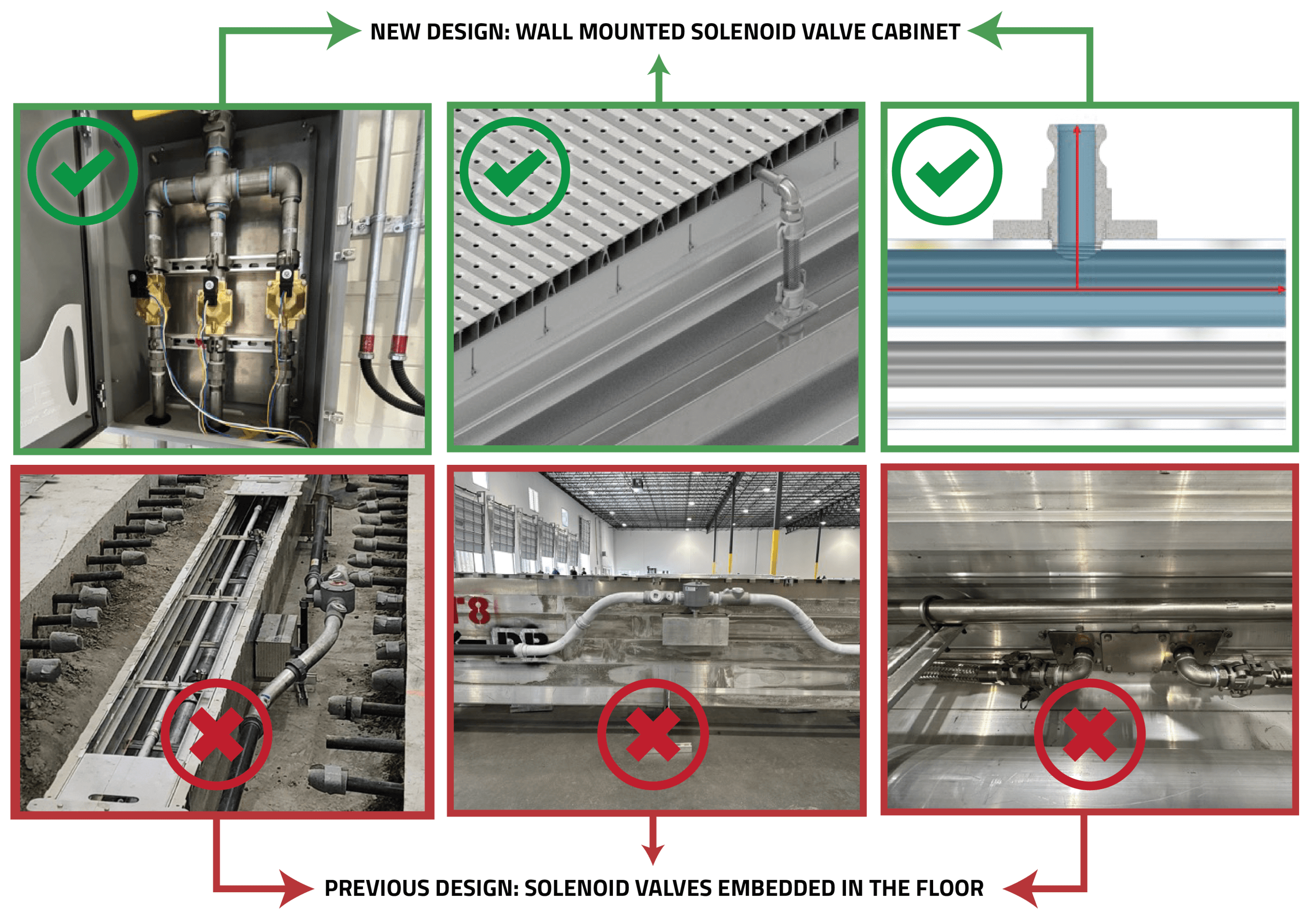
Hangar fire protection systems are typically evaluated based on their effectiveness during design and commissioning. But less attention is typically paid to what it takes to keep them ready, or what a single mechanical fault can cost when it occurs at the wrong time.
Material selection and system architecture shape both performance and reliability. ILDFA is engineered with these constraints in mind, not just code compliance.
Material That Stands the Test of Time
ILDFA uses marine-grade 6000-series aluminum alloy, proven in offshore platforms and industrial environments. No coatings. No scheduled reapplication.
Systems built with coated carbon steel depend on long-term coating performance. In coastal or high-humidity environments, this can increase maintenance requirements and introduce corrosion-related considerations over time.

Passive by Design

ILDFA protects by draining ignitable liquid through the floor, removing the fuel leg of the fire triangle before ignition conditions can develop. This function is structural and continuous.
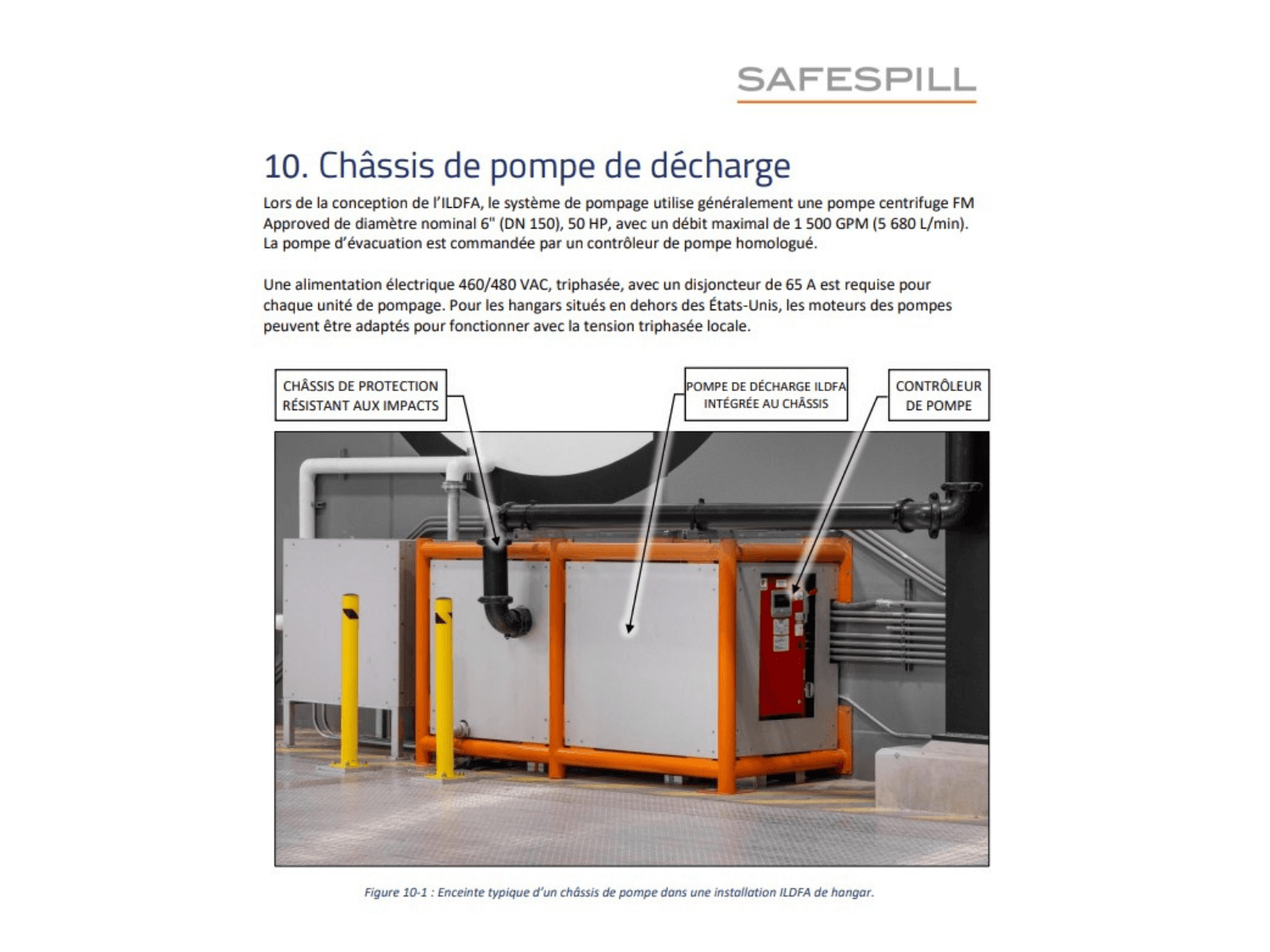
Passive protection reduces reliance on activation and mechanical response. In configurations that include flushing components, those systems move liquids to containment after drainage has already addressed the pool fire condition.
In retrofit applications, pumps and controls support post-event fluid management. In both cases, the core protection operates independently of component status.
Warranty Built for Real Hangar Operation
ILDFA includes a 10-year warranty with inspection and maintenance support.
Warranty structure can provide insight into expected maintenance strategies and lifecycle performance. For facilities designed to operate over multiple decades, warranty terms are one factor used to evaluate long-term system reliability.
Specifying for the Long Term
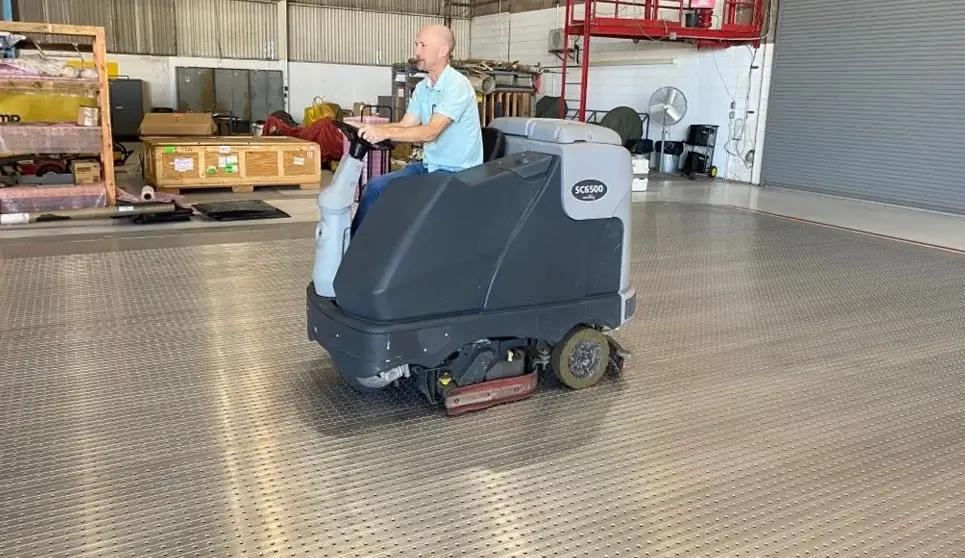
Evaluating fire protection over a facility’s full lifespan extends beyond performance during a fire event. Material durability, maintenance requirements, system dependency, and infrastructure needs all contribute to long-term outcomes.
ILDFA addresses these factors through material selection, passive operation, and being officially recognized by NFPA 409 as a code-compliant alternative to traditional suppression systems.