On paper, traditional hangar fire protection systems can appear cost-effective during initial design, but that upfront price often neglects ongoing maintenance costs and additional infrastructure outside of the hangar that are necessary to make these systems operational.
Where the Cost of Foam Actually Shows Up
For many teams, the real cost of foam is not visible in the initial quote. It comes to light later in:
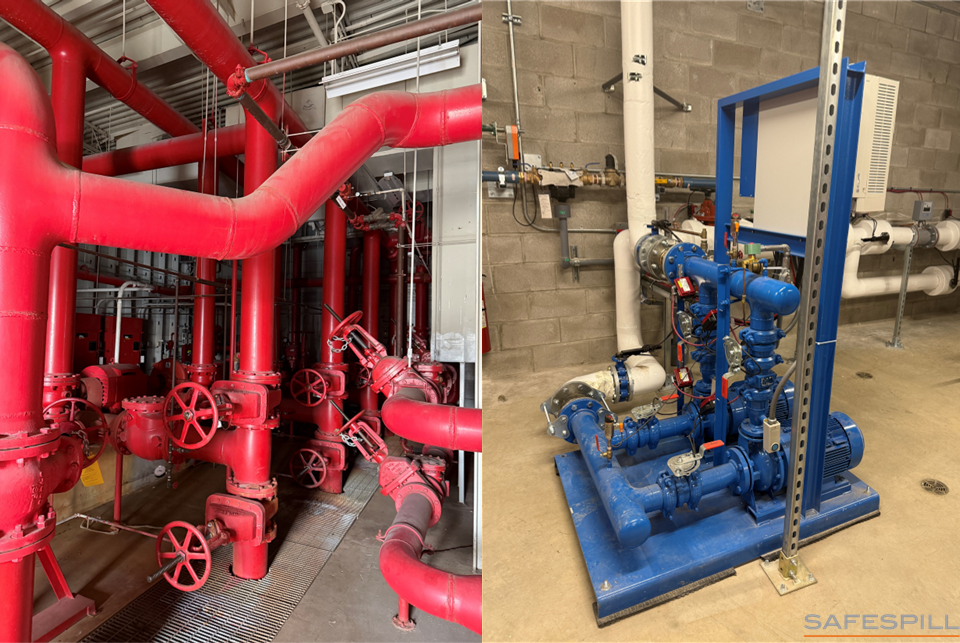
- Large, dedicated infrastructure (water supply tanks, pump rooms, and containment tanks) that eat up real estate and require additional maintenance.
- Expensive inspection, maintenance, and servicing requirements.
- Cost of refill for concentrate when the expiration date is reached or after an accidental discharge.
Over time, this maintenance burden compounds. In many cases, these systems begin to degrade, fail, and fall out of compliance after 20-25 years. Not because they were designed incorrectly, but because sustaining them becomes difficult and expensive.
A Different Way to Evaluate
For many teams, this has led to a shift in how systems are evaluated.
Rather than focusing only on initial cost, it's moving toward:
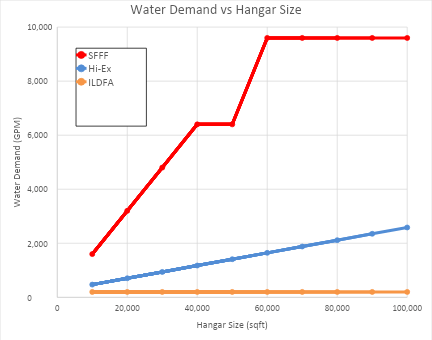
- Reduced infrastructure requirements for water supply and containment
- Simplified inspection and maintenance
- No risk of costly accidental discharge events
- Systems designed for 50+ years of service life
Newer approaches, such as ILDFA, are being adopted because they directly address many of these long-term challenges. By reducing reliance on large supporting infrastructure and avoiding chemical discharge systems, they offer a more practical fit for active hangar environments.
The result is a system that reduces long-term operational burden while maintaining performance.