Flame activated systems wait until it’s too late.
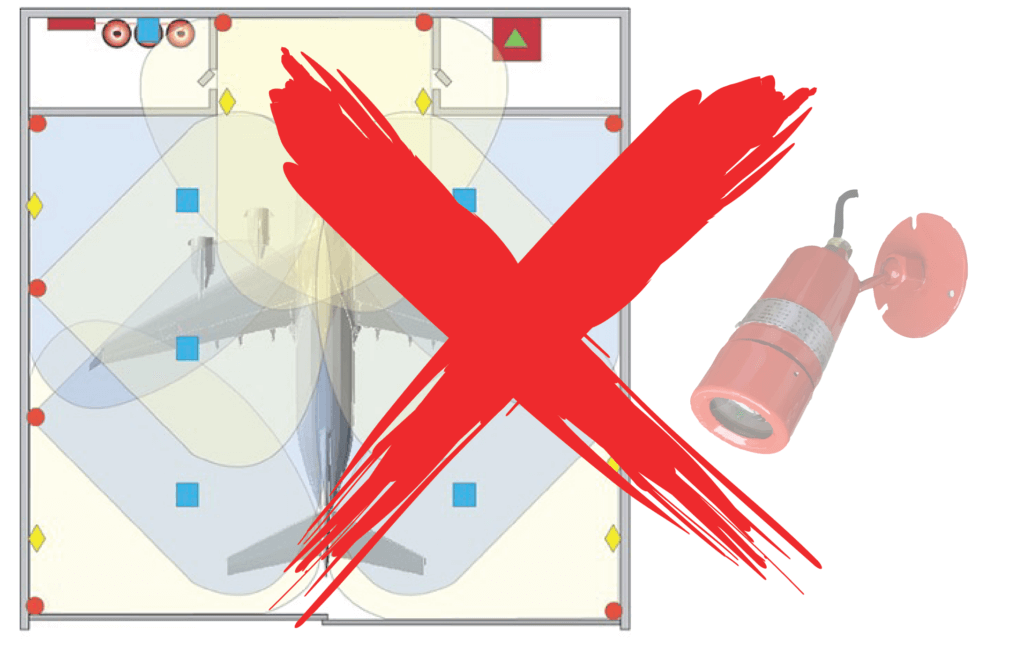
Legacy fire protection systems rely on flame detectors to trigger foam discharge. But flames mean ignition has already occurred.
Line-of-sight requirements mean double coverage.
Flame detectors need line-of-sight, so obstacles force redundant coverage, which adds cost and complexity.
False activations cause damage.
From equipment downtime to cleanup costs, there’s no such thing as a harmless discharge. And unfortunately in some cases have resulted in a fatalities.
ILDFA doesn’t rely on activation. It removes the fuel.
It provides passive fire protection by eliminating the fuel source, the flammable liquid, before ignition can occur. Gravity pulls the liquid into the floor's containment system, removing one leg of the fire triangle.
Liquid detection supports cleanup, not activation.
ILDFA includes a flushing system triggered by liquid detection, but that's for clearing residual fuel, not for activating the system. There's no flame detection and no external trigger dependency.
No foam. No PFAS. No optical triggers.
ILDFA carries no risk of accidental discharge, no chemical cleanup, and no environmental hazard to manage.